|
|

In order to give our clients the best of our service, we always try to apply the latest and advance technology
in our service. Below are several technology we have for you through our service:
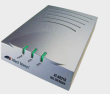 Digital Subscriber Line
More information Digital Subscriber Line
More information 
Digital Subscriber Line or DSL is a family of technologies that provide digital data transmission over
the wires of a local telephone network. Typically, the download speed of DSL ranges from 128 kilobits
per second (kbit/s) to 24,000 kbit/s depending on DSL technology and service level implemented.
Upload speed is lower than download speed for Asymmetric Digital Subscriber Line (ADSL) and equal
to download speed for Symmetric Digital Subscriber Line (SDSL).
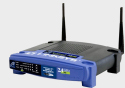 Wireless Fidelity (Wi-Fi)
More information Wireless Fidelity (Wi-Fi)
More information
Wi-Fi was intended to be used for mobile computing devices, such as laptops, in LANs, but is now
often used for increasingly more applications, including Internet and VoIP phone access, gaming,
and basic connectivity of televisions, DVD players, Wi-Fi Internet Radio and other consumer
electronics. There are even more standards in development that will allow Wi-Fi to be used by
cars in highways in support of an Intelligent Transportation System to increase safety, gather statistics,
and enable mobile commerce IEEE 802.11p.
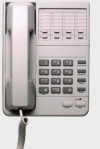 IP-PABX
More information IP-PABX
More information
In regular telephone systems, a PBX (private branch exchange) is the switching system that manages calls
between internal or local users. It also shares a number of lines that connect to the external, public phone
system and parcels them out as needed to the local users. In addition, enterprise PBX systems have other
features that allow them to take incoming calls, send them to the correct extensions, connect calls to
answering services, etc. A typical PBX consists of a set of external phone lines, a computer server system
that manages call switching, a set of internal phone lines and some form of console for manual control.
In VoIP or IP telephony systems, the IP-PABX does all this and more. It performs all the switching and
connecting of VoIP calls.
Gigabit Ethernet
More information
As a result of research done at Xerox Corporation in the early 1970s, Ethernet has evolved
into the most widely implemented networking protocol today. Fast Ethernet increased speed
from 10 to 100 megabits per second (Mbit/s). Gigabit Ethernet was the next iteration, increasing
the speed to 1000 Mbit/s. The initial standard for Gigabit Ethernet was standardized by the IEEE
in June 1998 as IEEE 802.3z. 802.3z is commonly referred to as 1000BASE-X (where -X refers to
either -CX, -SX, -LX, or (non-standard) -ZX).
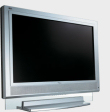 IP-TV
More information IP-TV
More information
IPTV (Internet Protocol Television) describes a system where a digital television service is
delivered using the Internet Protocol over a network infrastructure, which may include delivery by
a broadband connection. For residential users, this type of service is often provided in conjunction
with Video on Demand and may be part of combined Internet services such as Web access and VoIP,
where it may then be called Triple Play or Quad Play, and is typically supplied by a broadband
operator using a single infrastructure. In businesses IPTV may be used to deliver television
content over corporate LAN's and business networks. Perhaps a simpler definition of IPTV would
be television content that, instead of being delivered through traditional formats and cabling, is
received by the viewer through the technologies used for computer networks.
 Dedicated Line
More information Dedicated Line
More information
In computer networks and telecommunications, a dedicated line is a communications cable dedicated
to a specific application, in contrast with a shared resource such as the telephone network or the
Internet. In practice, such services may not be provided by a single, discrete, end-to-end cable, but they do
provide guarantees of constant bandwidth availability and near-constant latency, properties that cannot
be guaranteed for more public systems.
|
|
 Digital Subscriber Line Digital Subscriber Line
 Wireless Fidelity (Wi-Fi) Wireless Fidelity (Wi-Fi)
 IP-PABX IP-PABX
 Gigabit Ethernet Gigabit Ethernet
 IPTV IPTV
 Dedicated Line Dedicated Line
|


